The Royal Writ
Charts
56

Players in Game

398 😀     89 😒
76,80%

Rating

The Royal Writ Steam Charts & Stats

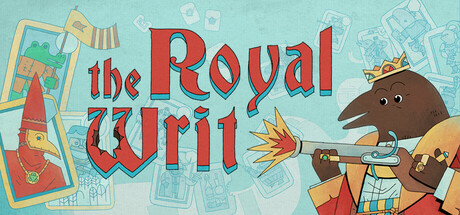
Sacrifice creates stories in this medieval roguelike deckbuilder. Watch your cards march to glory or permanent death as they battle toward the enemy. Each fallen hero becomes part of your kingdom's legend. Command wisely... some sacrifices are necessary.
App ID3333700
App TypeGAME
Developers
Publishers Yogscast Games
Categories Single-player, Steam Cloud, Family Sharing
Genres Strategy
Release Date2025
Platforms Windows
Supported Languages English

The Royal Writ
56 Players in Game
398 All-Time Peak
76,80 Rating

Steam Charts

The Royal Writ
56 Players in Game
398 All-Time Peak
76,80 Rating

At the moment, The Royal Writ has 56 players actively in-game. This is 0% lower than its all-time peak of 398.


The Royal Writ Player Count

The Royal Writ monthly active players. This table represents the average number of players engaging with the game each month, providing insights into its ongoing popularity and player activity trends.

Month Average Players Change
2025-08 139 0%

The Royal Writ
487 Total Reviews
398 Positive Reviews
89 Negative Reviews
Mostly Positive Score

The Royal Writ has garnered a total of 487 reviews, with 398 positive reviews and 89 negative reviews, resulting in a ‘Mostly Positive’ overall score.

Reviews Chart


Chart above illustrates the trend of feedback for The Royal Writ over time, showcasing the dynamic changes in player opinions as new updates and features have been introduced. This visual representation helps to understand the game's reception and how it has evolved.


Recent Steam Reviews

This section displays the 10 most recent Steam reviews for the game, showcasing a mix of player experiences and sentiments. Each review summary includes the total playtime along with the number of thumbs-up and thumbs-down reactions, clearly indicating the community's feedback

Playtime: 1200 minutes
Not enough content
👍 : 1 | 😃 : 0
Negative
Playtime: 1446 minutes
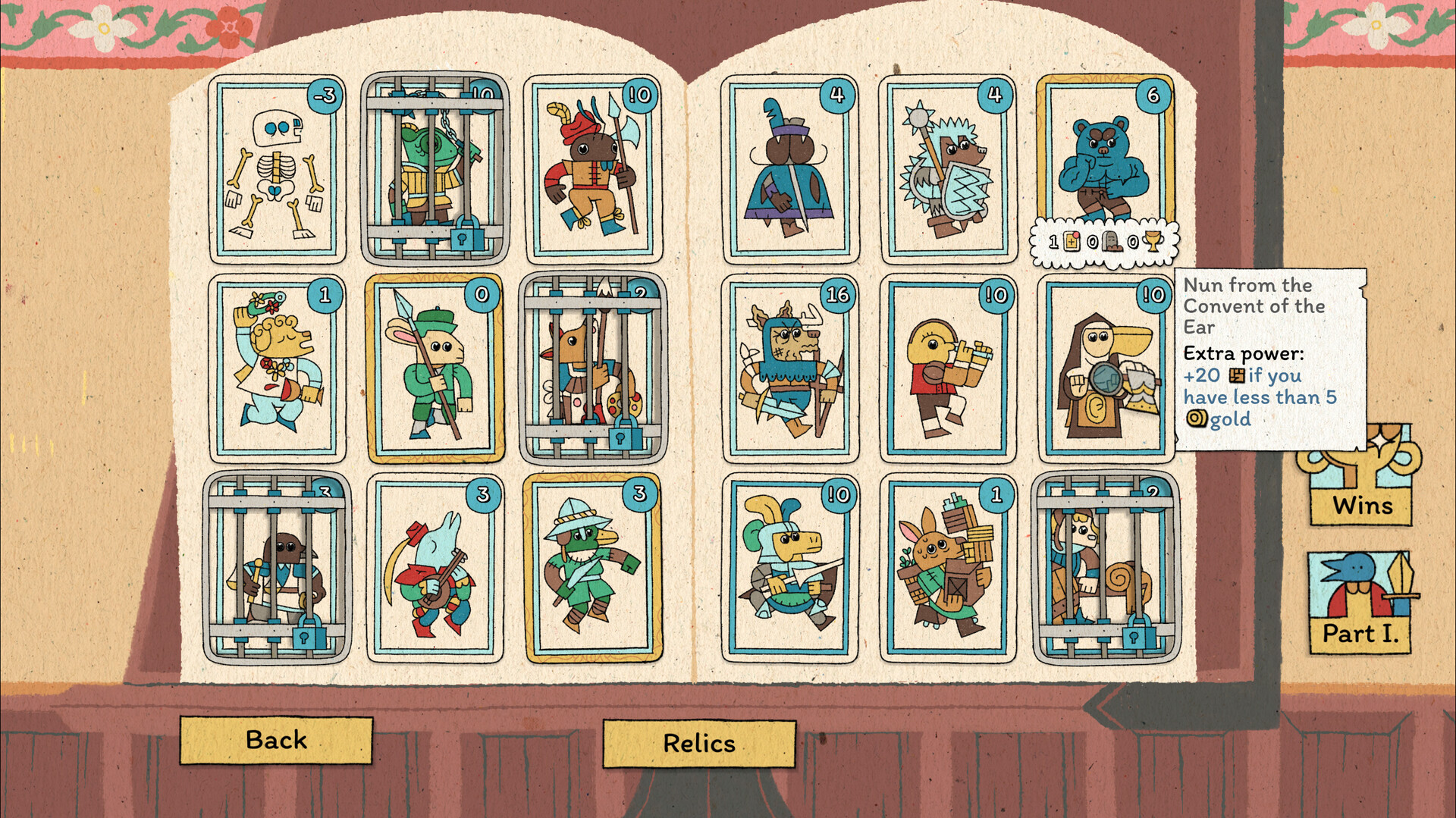
This is a beautiful, charming, deckbuilding roguelite. Have you played Cobalt Core? If so, I think you'll like this too. It does something few deckbuilding roguelites do. It has a bit of a story. Like Cobalt Core, the story is revealed in short vignettes, which never drag or include any padded out dialogue. They are short, quirky and colourful. These play out in your first playthrough, but once you have successfully completed Act I and Act II, they do not repeat, so repeat plays are not burdened with scenes you need to skip or endure. There is a of variety here, including: Your core deck, which has two types of cards, cards with an additive value, like +10, and cards with a multiplier value, like x20. The basic gameplay has you using these on the battlefield to produce a number which reduces the enemy health. The significant variety, enough for many playthroughs, comes from: > Ways to enhance the card values that remain persistent throughout the rune > Trinkets that add bonuses or mechanics > Different stage bosses, with some very different mechanics to learn and counter > Status that effect cards, seemingly negative, but very exploitable for benefit > Finding smart combinations of cards for synergy, and the card pool is deep enough. I've found at least 8 very viable team builds Then there is a difficulty system, running I think from 1 to 10, which you unlock 1 at a time, very classic Slay the Spire like. Regarding Act II . . . there are a lot of reviews mentioning brutal difficulty. If you are used to the higher end of Slay the Spire like difficulties, I do not think it likely you'll find it so challenging. Relative to Act I, there are some new mechanics, and you do not carry across your Act I deck. I think the renewed learning curve may trip up even some capable players. Personally, I found the default Act II difficulty modestly challenging, but by no means a big struggle.
👍 : 4 | 😃 : 0
Positive
Playtime: 2286 minutes
The charm of this game is unlike anything I've seen before. As simple as the rules may seem at first, the amount of unexpected synergies and sudden complications make this game hard to get bored of. Not to mention, the amount of times something bad would help me, and something seemingly good would sabotage me really adds to the originality of all the possible strategies. Some things in this game really stick to the theme that Medieval times were difficult, and even the most simplest of things had risks for the better or worse. Death in this game is utilized as a part of your story. Loosing a card can be as little as giving them away to a sacrifice for something better, or loosing one of your bravest warriors in battle and genuinely grieving them and all they had endured for you. (I'll never forget you, Bacha, Knight of Yore). In my personal opinion: the game is fun and charming. It's art style is eye candy to me, and I love all the effort put into its humor and functions. The music and sound effects are great too. Id beg strangers on the street to play it if I could, but since I have better things to do (like playing this game), I'm begging strangers on the internet instead.
👍 : 0 | 😃 : 0
Positive
Playtime: 656 minutes
A fun game with great art, it’s an easy recommendation to people who like strategy. There’s even a second, more challenging, act that uses new mechanics. The best part about cards being characters is how they change, there’s a few fun interactions that change cards into different ones that are the same character and act two features some characters from act one with different abilities and art.
👍 : 0 | 😃 : 0
Positive
Playtime: 690 minutes
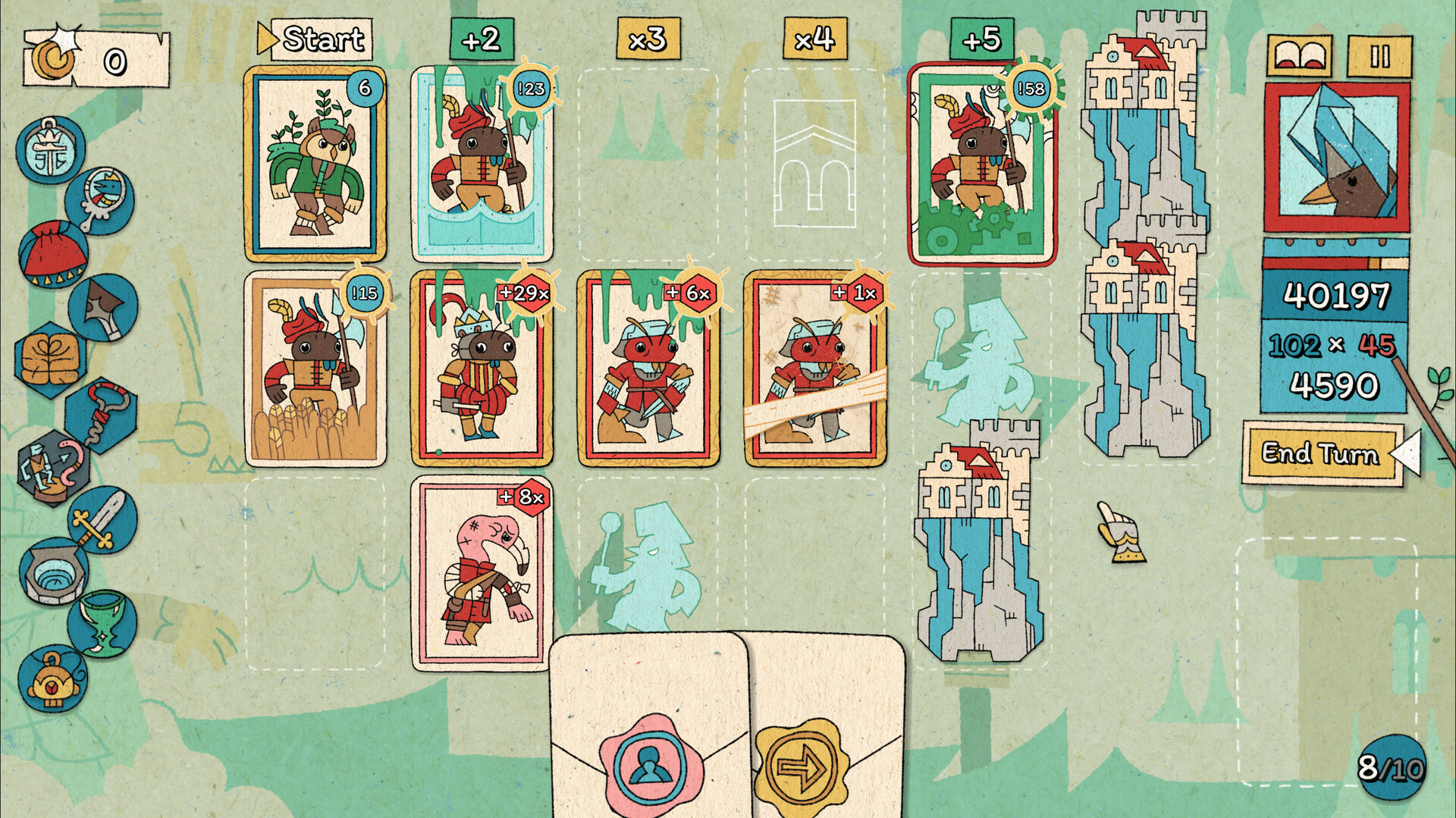
The Royal Writ, developed by Save Sloth Studios and published by Yogscast Games, is a roguelike deckbuilding game that sets itself apart by transforming cards into active participants on a battlefield rather than static actions. Instead of simply playing cards for immediate effects, each card represents a unit that physically advances across lanes toward an enemy objective. This design creates a blend of deckbuilding and positional strategy, where success depends not only on the strength of your deck but also on how you deploy and manage your units over time. The core gameplay revolves around carefully timing and placing units so they can advance across the battlefield and deal damage before being lost. Units grow in power as they move forward, creating a natural escalation that rewards patience and planning. However, once a unit reaches its target, it is removed from play, forcing players to constantly balance offense with sustainability. This system introduces a unique tension, as committing too many strong units early can leave you without resources later, while holding back may result in missed opportunities to deal critical damage. Deckbuilding is a central pillar of the experience, offering a wide variety of cards, relics, and modifiers that can significantly alter how each run unfolds. Players are encouraged to experiment with different combinations, building synergies that amplify their effectiveness. Some strategies may focus on maximizing damage output through stacking effects, while others emphasize control and careful positioning. The flexibility of the system allows for diverse playstyles, making each run feel distinct and encouraging repeated experimentation. As a roguelike, the game relies heavily on randomness to keep the experience fresh. Encounters, rewards, and events are procedurally generated, ensuring that no two playthroughs are exactly the same. This unpredictability adds excitement but also introduces an element of risk, as players must adapt to whatever options they are given. Over time, players unlock additional cards and upgrades, expanding their pool of possibilities and providing a sense of long-term progression that rewards persistence. The game’s structure is divided into multiple stages, each introducing new challenges and mechanics that build upon the core system. As players progress, they encounter increasingly complex scenarios that require a deeper understanding of timing and positioning. These additions help maintain engagement by preventing the gameplay from becoming repetitive, though they can also contribute to a steep learning curve. New mechanics are not always immediately intuitive, and players may need several attempts to fully grasp how to respond effectively. Visually, The Royal Writ adopts a colorful and stylized presentation that contrasts with its strategic depth. The characters and environments have a playful, almost storybook-like quality, which makes the game approachable at first glance. Beneath this lighthearted aesthetic, however, lies a system that demands careful thought and planning. The audio design complements this tone, with music and sound effects that enhance the atmosphere without overshadowing the gameplay. Despite its strengths, the game is not without its challenges. The reliance on random elements can sometimes lead to frustrating situations where success feels dependent on luck rather than skill. Certain encounters or combinations of events may be difficult to overcome regardless of preparation, which can make some runs feel unfair. Additionally, the complexity of the mechanics can be overwhelming for newcomers, as the game provides limited guidance and expects players to learn through trial and error. Even with these issues, The Royal Writ succeeds in delivering a distinctive and engaging experience that stands out within the deckbuilding genre. Its combination of strategic positioning, evolving mechanics, and replayable structure creates a gameplay loop that is both challenging and rewarding. For players who enjoy experimenting with systems and refining their strategies over multiple runs, it offers a compelling and memorable experience. Rating: 8/10
👍 : 3 | 😃 : 0
Positive
Playtime: 265 minutes
went from a game i loved in the first act to a game that felt completely different in the second and not what i signed up for. a shame
👍 : 4 | 😃 : 0
Negative
Playtime: 356 minutes
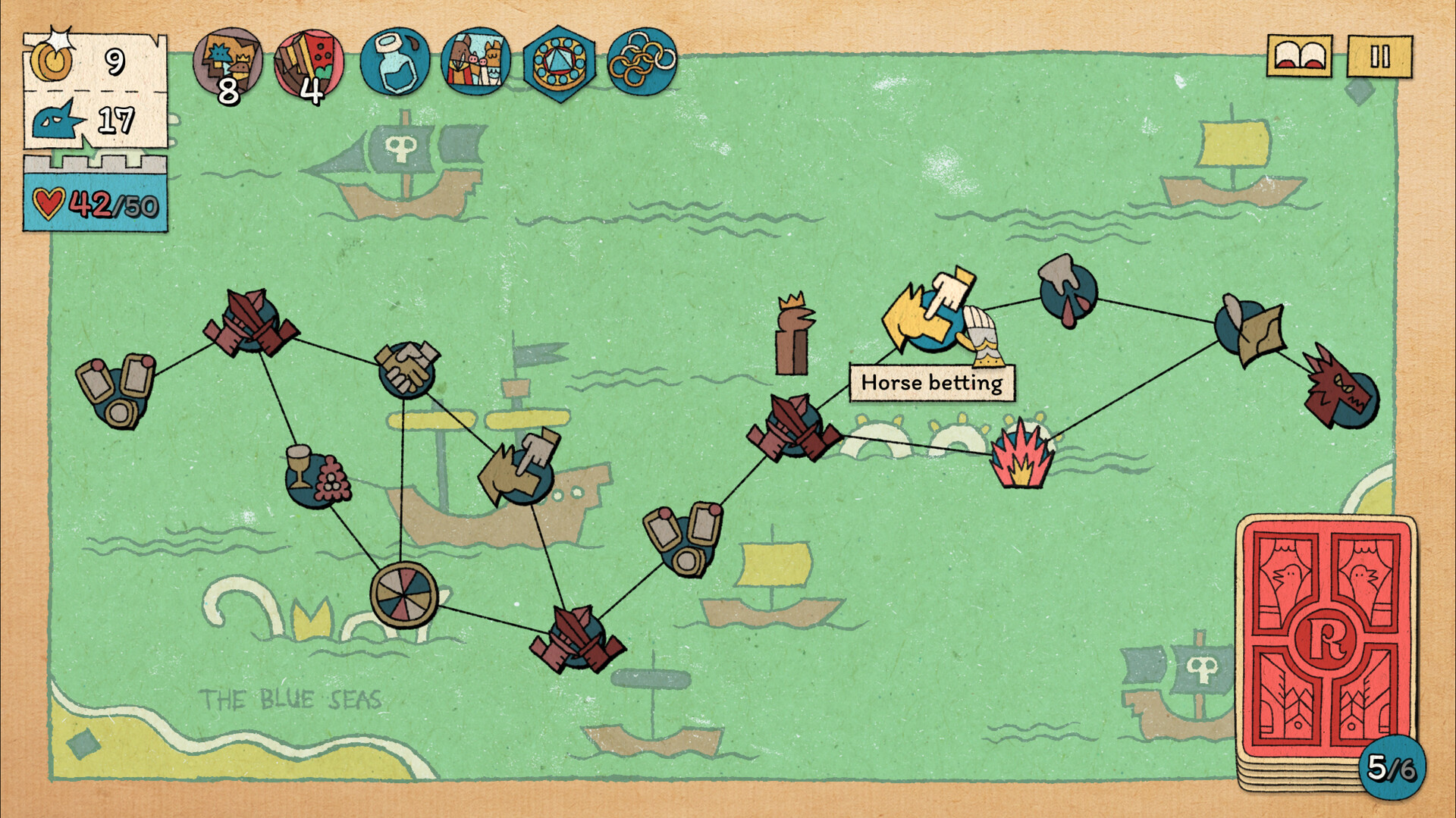
I really loved this game, and I wanted to share my thoughts and feedback with both potential players and the developers. First of all, I didn't have any high expectations of the game, but the art style caught my attention and it is truly good [h1] Story [/h1] The story follows the Crow King, an anthropomorphic bird(?) ruling a kingdom and expanding his lands further and further. That's actually the whole story. It's quite simple, but it's still interesting to follow, and the game actively keeps you engaged. [h1] Gameplay [/h1] A few words about the mechanics: I'm not fond of deck-builder genres, so I was quite skeptical before I ran it. Here's how the gameplay works: you start with a deck on a battlefield. The field consists of columns and the final column is the base that you need to destroy. Every turn your cards (that you put at the first column) advance further and each new column buffs your card. However, if you hit the final column (the enemy's base), your card will die. The gameplay is based on collecting cards on your way to the boss, defeating them and continuing the cycle. There are tons of things that may happen to your cards and you can create unique combinations. For instance, I had a card that gives me money and boosts morale for each poisoned card, so I made half my deck poisoned and that way I could farm money. [h1] Replayability [/h1] The thing that I found cool is that the game is divided into two Acts and the mechanics in each Act are distinct, which allows you to replay both of them and it feels genuinely different. The story is not that long, but endless mode solves this problem. [h1] Drawbacks [/h1] After all of the above, there are some drawbacks that developers may take into account for their future projects (and I hope there will be more games from them). Maybe it's my personal problem, but it was hard to understand the descriptions of some cards. English is not my native language, so sometimes I switched to Russian to make sure I got everything right, but it didn't clarify much, and the only thing left was to test it in practice. Moreover, there are some cards whose purpose I can't understand even now. Why would I even use them? Some cards can cause freezing or bleeding and I don't know how I'm supposed to use them to gain an advantage. Yes. there is tutorial and manual in game but it lacks details Another small element that I found annoying is that the history of your dead cards shows only their name and the cause of death. But sorry guys, I don't remember what the cards are called. It would be much better if I could hover over the name to see what the card is, or if I could name a card myself, because two the same card types can exist in your deck with the same name. [h1] Final Thoughts [/h1] Honestly, all these drawbacks didn't affect me much and the game still feels amazing and draws me back to try new combinations or find the rest of the unopened cards. And remember... send the letter
👍 : 4 | 😃 : 0
Positive
Playtime: 196 minutes
DOn`t. The game has 2 acts. The first act is fun... and the tutorial more or less. The second act ist hitting a brick wall from the get go. And imo its not worth running through that wall.
👍 : 6 | 😃 : 0
Negative

The Royal Writ Screenshots

View the gallery of screenshots from The Royal Writ. These images showcase key moments and graphics of the game.


The Royal Writ Minimum PC System Requirements

Minimum:
  • OS: Windows 10/11
  • Processor: Intel 12500 / AMD Ryzen 5 5600
  • Memory: 8 GB RAM
  • Graphics: Intel 12500 Integrated graphics / AMD Ryzen 5 5600G integrated graphics
  • DirectX: Version 11
  • Storage: 2 GB available space

The Royal Writ Recommended PC System Requirements

Recommended:
  • OS: Windows 11
  • Processor: Intel 12500 / AMD Ryzen 5 5600
  • Memory: 8 GB RAM
  • Graphics: Nvidia GTX 1080 / AMD RX 6600
  • DirectX: Version 12
  • Storage: 2 GB available space

The Royal Writ has specific system requirements to ensure smooth gameplay. The minimum settings provide basic performance, while the recommended settings are designed to deliver the best gaming experience. Check the detailed requirements to ensure your system is compatible before making a purchase.


File uploading