

 Store
StoreEcho of the Walls Reviews
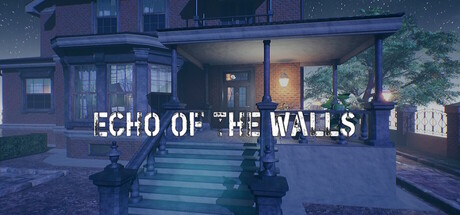
Enter a world where the lines between reality are blurred. Like Daniel, you came here in search of the truth, but found yourself trapped in a terrifying mind game. Your only key to freedom and understanding is an ancient Polaroid camera, capable of capturing the invisible.
| App ID | 4159670 |
| App Type | GAME |
| Developers | STuNT |
| Publishers | STuNT |
| Categories | Single-player, Family Sharing |
| Genres | Indie, Action, Simulation, Adventure |
| Release Date | November 2025 |
| Platforms | Windows |
| Supported Languages | English |
23 Total Reviews
16 Positive Reviews
7 Negative Reviews
Mixed Score
Echo of the Walls has garnered a total of 23 reviews, with 16 positive reviews and 7 negative reviews, resulting in a ‘Mixed’ overall score.
Reviews Chart
Chart above illustrates the trend of feedback for Echo of the Walls over time, showcasing the dynamic changes in player opinions as new updates and features have been introduced. This visual representation helps to understand the game's reception and how it has evolved.
Recent Steam Reviews
This section displays the 10 most recent Steam reviews for the game, showcasing a mix of player experiences and sentiments. Each review summary includes the total playtime along with the number of thumbs-up and thumbs-down reactions, clearly indicating the community's feedback
Playtime:
712 minutes
Echo of the Walls, developed and published by STuNT, is a first-person psychological horror adventure that centers on atmosphere, perception, and the fragile boundary between memory and reality. Set within the decaying confines of Blackwood Manor, the game places players in the role of Daniel, an investigator who arrives seeking answers but quickly becomes trapped within the mansion’s shifting corridors and oppressive silence. Rather than relying on constant jump scares or relentless action, the experience builds its identity around tension, environmental storytelling, and a central mechanic that reshapes how players interact with the world: an antique Polaroid camera capable of revealing hidden fragments of the past.
The mansion itself is the game’s true protagonist. Blackwood Manor is designed as a labyrinthine structure filled with narrow hallways, locked chambers, forgotten studies, and rooms frozen in time. Every space feels intentional, layered with visual cues that hint at tragedy and long-buried secrets. Peeling wallpaper, dim lighting, and carefully placed objects create an unsettling realism. Exploration unfolds slowly, encouraging players to examine their surroundings closely rather than rush forward. The manor’s architecture often loops back on itself, reinforcing a sense of entrapment and disorientation that mirrors Daniel’s growing psychological instability.
The Polaroid camera is more than a simple tool; it is the foundation of both narrative progression and puzzle design. By photographing specific objects, paintings, or locations, players can reveal hidden truths or access echoes of past events that are otherwise invisible. These developed images act as bridges between timelines, allowing Daniel to witness fragments of tragedy and piece together the mansion’s history. This mechanic cleverly ties gameplay to theme, emphasizing perception and interpretation. The act of taking a photograph becomes an investigative ritual, blending curiosity with apprehension, as players never quite know what might be revealed when the image develops.
Horror in Echo of the Walls leans heavily into psychological dread rather than overt spectacle. A mysterious entity known as the Echo inhabits the manor, reacting subtly to player progress. Its presence is often suggested through sound—distant whispers, shifting floorboards, or sudden silence where ambient noise once lingered. As the story deepens, the Echo becomes more assertive, creating moments of pursuit or confrontation that break the otherwise measured pacing. However, the game’s strength lies in sustained tension rather than frequent shocks. Fear builds gradually, fed by uncertainty and the oppressive stillness of the environment.
Puzzle design integrates seamlessly with exploration. Many of the manor’s locked pathways and hidden chambers require solving riddles rooted in environmental observation. Clues are rarely handed directly to the player; instead, they are embedded within journal entries, photographs, or subtle environmental details. This encourages thoughtful engagement and rewards attentiveness. While most puzzles are fair and logically constructed, their placement within a horror context heightens the emotional stakes. Solving a riddle does not simply advance the story—it often pushes Daniel deeper into danger.
Visually, the game favors grounded realism over stylized horror aesthetics. Lighting plays a crucial role in establishing tone, with shadows dominating interiors and limited light sources casting distorted shapes along the walls. The Unreal Engine foundation supports detailed textures and atmospheric effects, but the emphasis is not on technical spectacle. Instead, visual design supports immersion, ensuring that every flickering light and distant silhouette contributes to unease. Complementing this is a carefully layered soundscape that amplifies isolation. The creak of wood, the hum of old electrical fixtures, and faint, unexplained noises form a constant reminder that Daniel is not alone.
Narratively, Echo of the Walls unfolds in fragments, trusting players to assemble meaning from scattered clues. The story explores themes of guilt, loss, and distorted memory. Rather than presenting a linear exposition, it allows interpretation to shape understanding. This approach may feel slow to those seeking immediate narrative payoff, but for players invested in psychological storytelling, it creates a sense of discovery that feels personal and earned. The emotional weight builds gradually as the connection between Daniel and the manor becomes clearer.
While the game’s deliberate pacing and minimal guidance contribute to immersion, they may also divide players. Those expecting fast-paced horror or heavy action elements may find the experience restrained. Occasional uneven pacing and the necessity of backtracking through similar corridors can momentarily disrupt momentum. However, for players who appreciate methodical exploration and atmospheric storytelling, these elements reinforce the game’s introspective tone rather than detract from it.
Ultimately, Echo of the Walls is a slow-burning psychological horror that prioritizes mood, immersion, and narrative subtlety over spectacle. Its innovative use of photography as both mechanic and metaphor gives it a distinctive identity within the genre. By weaving puzzle-solving, exploration, and emotional storytelling into a cohesive experience, it creates a haunting journey that lingers beyond its final moments. For those drawn to atmospheric horror that challenges perception and patience, Echo of the Walls offers a deeply unsettling and thoughtfully constructed descent into memory and fear.
Rating: 6/10
👍 : 0 |
😃 : 0
Positive