Playtime:
636 minutes
Factory 95 is an inventive automation and management game developed and published by Macrobit Interactive that transforms a seemingly absurd idea into an engaging strategic experience. Rather than building traditional industrial assembly lines filled with conveyor belts and machinery, players are tasked with constructing highly efficient PowerPoint production systems inside a computer environment inspired by the mid-1990s. The unusual premise immediately captures attention, but what keeps players invested is the surprising depth hidden beneath the retro presentation. It is a game that understands its niche and fully commits to it, creating a memorable blend of factory management, optimization, and nostalgic computing culture.
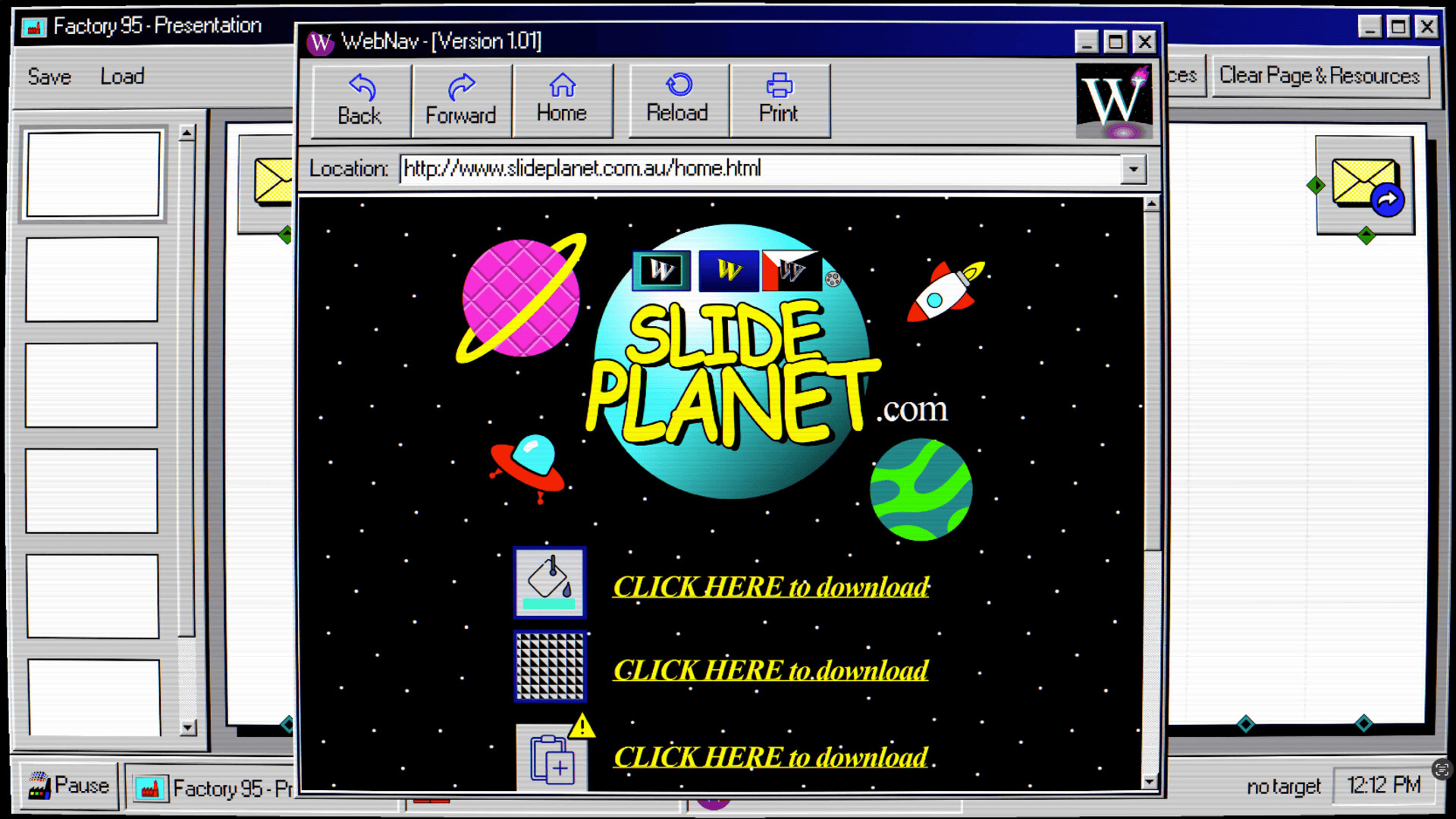
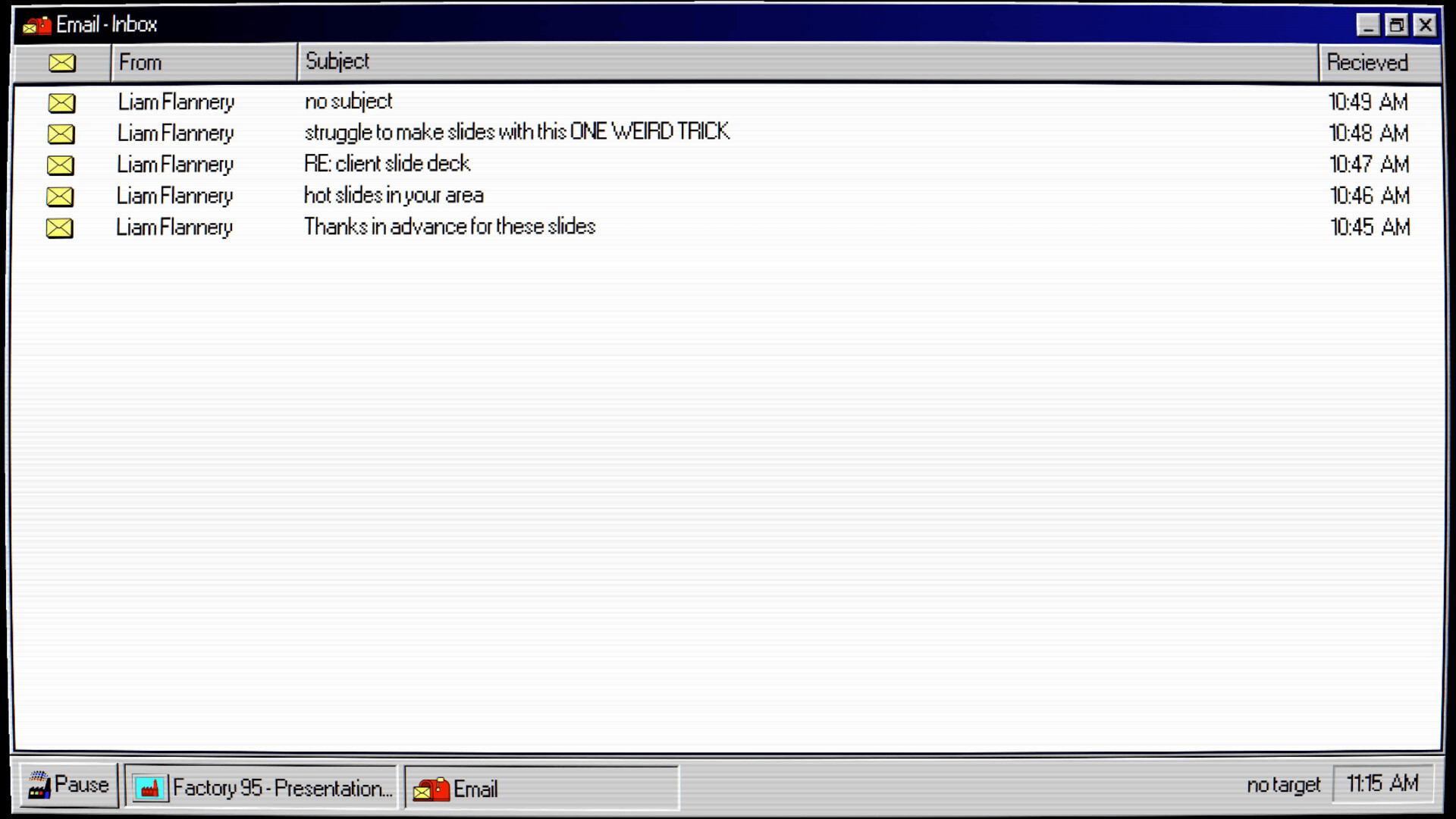
The game's setting revolves around a desktop operating system that strongly evokes the era of Windows 95. Players interact with emails, browse an early-style internet, install new software, and take on projects from clients while attempting to grow a successful business. This theme is more than a visual gimmick. The entire progression system is built around the fantasy of running a software-oriented company during the rise of personal computing. Every menu, interface element, and gameplay mechanic reinforces the illusion of working within an old-school computer environment, giving the game a strong identity that helps it stand apart from many automation titles.
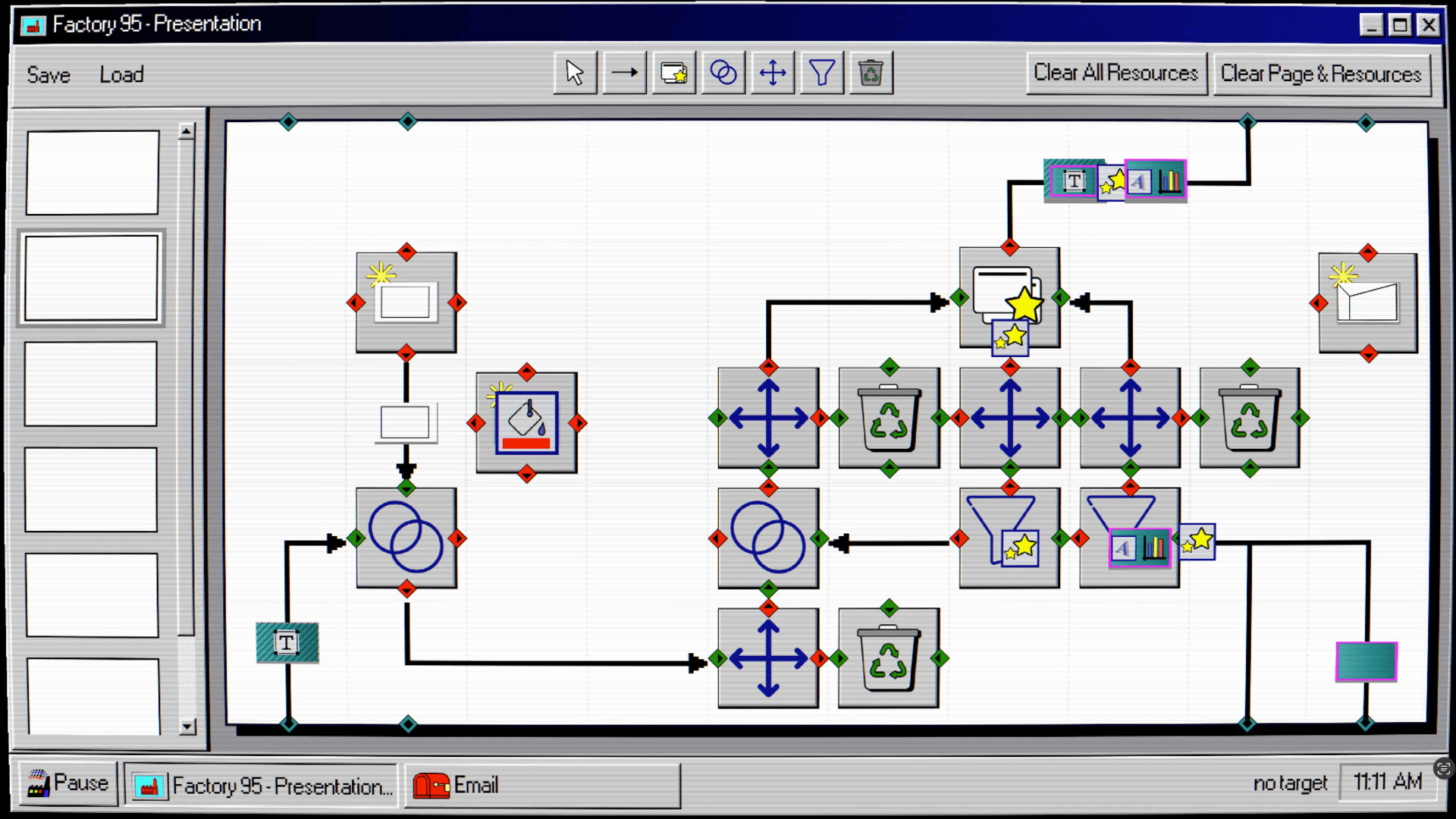
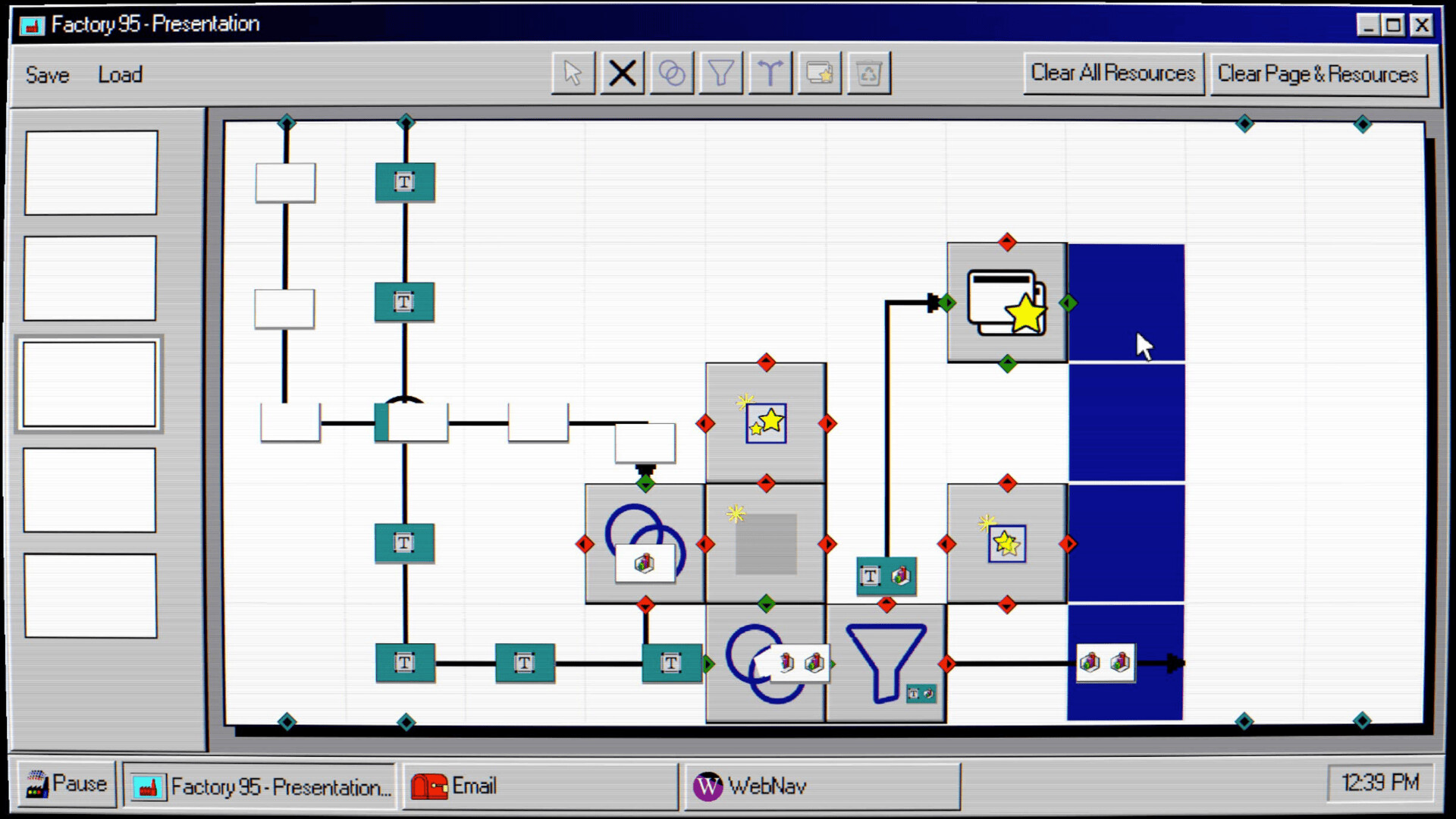
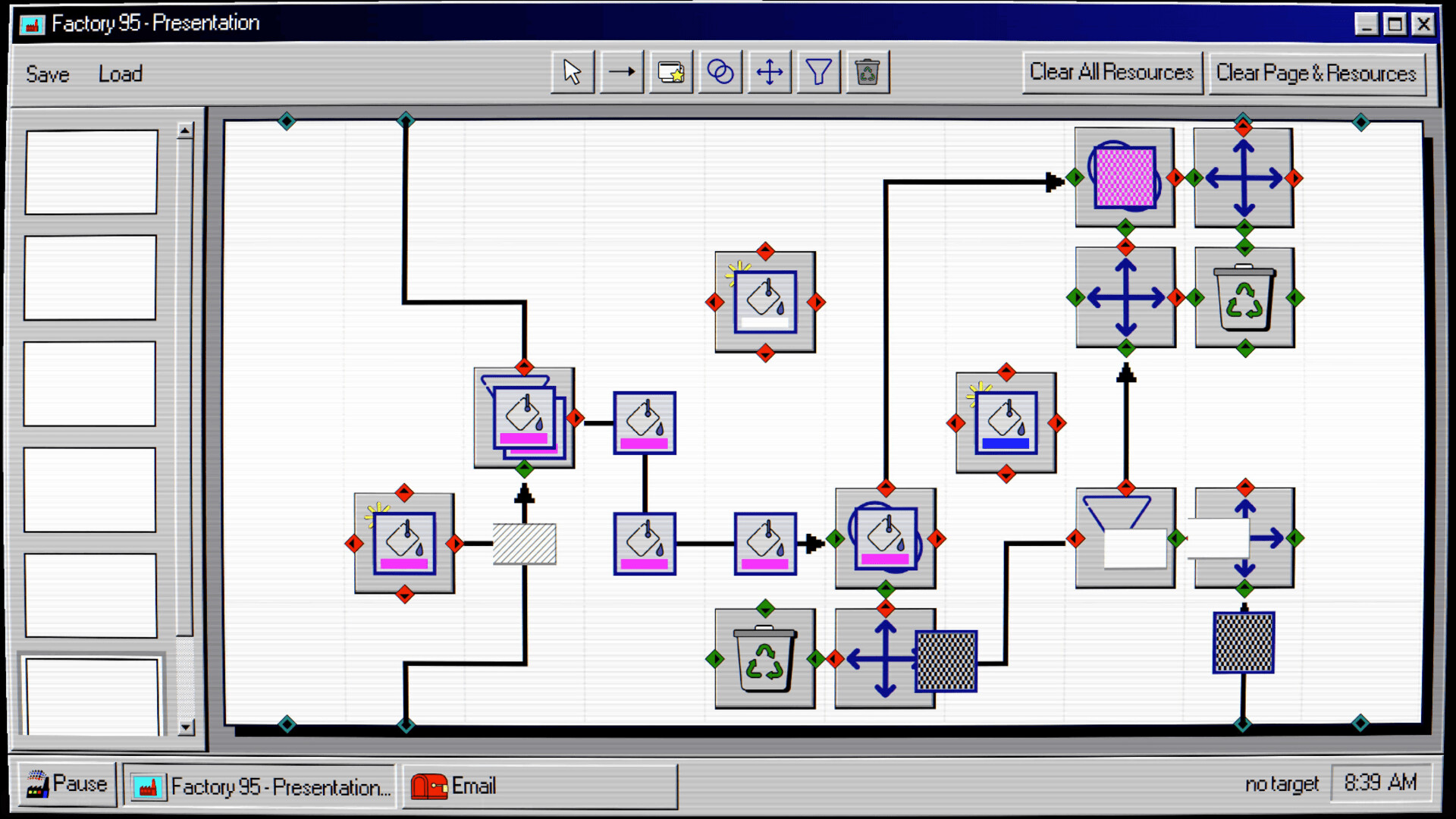
At the heart of the experience lies the factory-building system. Instead of manufacturing physical goods, players design production networks that generate presentation slides. This unusual twist creates a fresh interpretation of familiar automation mechanics. Resources must be routed correctly, systems need to be optimized, and limited space forces careful planning. Each slide becomes valuable real estate, making efficient layouts essential to success. The challenge comes from fitting increasingly complicated processes into constrained areas while maintaining productivity and meeting client demands.
One of the game's greatest strengths is how it balances accessibility with complexity. Early tasks introduce concepts gradually, allowing players to understand the basics before more advanced systems become available. As the company grows, new tools, upgrades, and software programs expand what can be accomplished. Factories that initially seem simple eventually evolve into intricate networks that require significant thought and experimentation. The sense of progression feels rewarding because every new feature opens opportunities for more efficient and creative solutions.
Factory 95 also succeeds as a puzzle game. Unlike many factory builders that focus primarily on expansion and scale, this title emphasizes optimization within limitations. Space restrictions force players to think carefully about every placement decision. Rearranging systems, refining layouts, and discovering elegant solutions become major sources of satisfaction. The game constantly encourages players to improve existing designs, creating a cycle of experimentation that can be highly addictive for fans of management and strategy titles.
The retro aesthetic contributes significantly to the overall appeal. The visuals intentionally mimic outdated software interfaces, complete with colorful windows and classic desktop design elements. While technically simple, the presentation is effective because it complements the gameplay perfectly. The nostalgic atmosphere creates charm without interfering with readability or functionality. References to vintage technology, early internet culture, and turn-of-the-century computer concerns add personality to the experience and make the setting feel authentic.
Another notable aspect is the replay value. Because factory layouts can be approached in multiple ways, players often discover new methods for improving efficiency long after completing initial objectives. Different strategies can produce successful results, encouraging experimentation and optimization. Those who enjoy refining systems and pushing production chains to their limits will find plenty of reasons to continue playing beyond the main progression path.
The game is not designed for everyone. Players seeking fast-paced action, storytelling, or visually spectacular set pieces may struggle to connect with its heavily systems-driven design. Some of the later challenges can become quite demanding, particularly for newcomers unfamiliar with automation games. However, for those willing to engage with its mechanics, the complexity becomes one of the most rewarding aspects of the experience rather than a drawback.
Factory 95 demonstrates how creativity can breathe new life into a familiar genre. By transforming presentation software into the foundation of a factory-building game and wrapping it inside a nostalgic computing theme, Macrobit Interactive delivers an experience that feels distinctive and surprisingly engaging. Its combination of management, optimization, puzzle-solving, and retro charm creates a package that is both entertaining and intellectually satisfying. While the premise may sound unusual on paper, the execution proves that innovative ideas can lead to genuinely compelling gameplay.
Rating: 8/10
👍 : 0 |
😃 : 0


 Store
Store