

 Store
Store
Death end re;Quest: Code Z Reviews
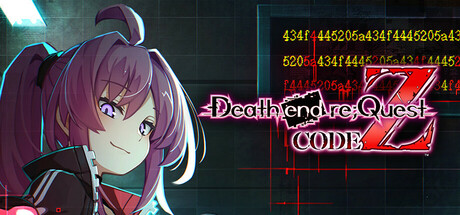
A parallel world created by the AI known as Iris. It's in this world Sayaka Hiwatari awakens, in a place called the Strain Area. Here, she'll encounter many familiar faces, but those who were friends in another world before may be foes here. Death looms at every step; will you ever find the end?
| App ID | 2914490 |
| App Type | GAME |
| Developers | IDEA FACTORY, COMPILE HEART |
| Publishers | Idea Factory International, Inc. |
| Categories | Single-player, Steam Achievements, Full controller support, Family Sharing |
| Genres | Strategy, RPG |
| Release Date | 27 Aug, 2025 |
| Platforms | Windows |
| Supported Languages | English, Traditional Chinese, Japanese |

Age Restricted Content
This content is intended for mature audiences only.
92 Total Reviews
72 Positive Reviews
20 Negative Reviews
Mostly Positive Score
Death end re;Quest: Code Z has garnered a total of 92 reviews, with 72 positive reviews and 20 negative reviews, resulting in a ‘Mostly Positive’ overall score.
Reviews Chart
Chart above illustrates the trend of feedback for Death end re;Quest: Code Z over time, showcasing the dynamic changes in player opinions as new updates and features have been introduced. This visual representation helps to understand the game's reception and how it has evolved.
Recent Steam Reviews
This section displays the 10 most recent Steam reviews for the game, showcasing a mix of player experiences and sentiments. Each review summary includes the total playtime along with the number of thumbs-up and thumbs-down reactions, clearly indicating the community's feedback
Playtime:
3047 minutes
1. go to dungeon > death > become stronger
2. go to dungeon again > another death > become stronger
👍 : 0 |
😃 : 0
Positive
Playtime:
3868 minutes
Let's start saying this is not a fully negative review. But my god those achievements are making me go crazy.
The story in this game is an amazing improvement over the second game, while literally continuing the story of the 1st game (while incorporating the characters from the second in a way that makes sense). I really ended invested in the story and the characters, and Sayaka is an interesting character to follow as the god of death.
That said, the ending is a cliffhanger for the next game, so a bit salty about that as well.
Gameplay is not too bad for a while, except for a couple of aspects that makes this game a massive slog. It's a 3rd person randomized dungeon crawler in which you have to either beat the boss and/or rescue people and help them exit the dungeon.
The gameplay itself is not bad for a while, even if it's a bit unbalanced, and some ♥♥♥♥♥♥♥♥ things here and there (mostly Sanity, Traps and a couple of Glitch Girls). But the crawling is SLOW as ♥♥♥♥... and there are 2 things that don't help with the slowlyness. The loading screen when moving floors (could do without this 10 sec screen when moving between 100 floors, really), and the floor designs... which again, is not too bad for the normal sections of the story, but oh boy does it get tedious for mid/late game.
And now the main part for this negative review: achievements, Death ends and dungeon navigation.
Let's start from less annoying to more annoying.
1. Dungeon Navigation: Again, fun for a while but the moment you hit a 25 floor dungeon... it starts to drag hard. Slow movement, impossible to increase speed in the dungeon even with cheat engine, when a monster is following you your movement gets even slower. And then, even when you are doing fine, you need to be careful about your sanity, because you will lose visibility, HP and the minimap the moment you lose your marbles. Which happens a lot, because there are some HORRENDOUS traps here and there (who thought a 100% drop in sanity by a single trap was a good idea??). That said, there are ways to navigate around the issues, but expect dungeons to take a while (the auto save inside the dungeon is handy)
2. Death Ends: I wouldn't complain about this if a) you only had 1 dead end per enemy, b) you didn't need to collect all of them for certain features, c) Shintas didn't exist and d) dungeon navigation was easier. But all those things combined made me spend 30 hours fishing for these dead ends, and 3 of those were only to get killed by the ♥♥♥♥♥♥♥ useless, painless, spineless, teleporting after they hit you, Shintas. ♥♥♥♥ you and have a nice day.
3. Achievements: Not only were they broken on release (and oh god, do I hope the Platinum trophy is not broken right now. Platinum trophy is ♥♥♥♥♥♥... yay), but they are insanely tedious. There is one that is almost a secret in which you need to beat a boss at the end of a 100 floor dungeon in expert, which is not too hard... but then you then to walk back the 100 floors AGAIN (just this dungeon took me 3-4 hours). Another achievement is about collecting money, but the only reasonable way to make money in this game for this achievement is replaying the story again, because playing for 30 hours with the sword that generates money on each kill does NOTHING. You need 10 Million, and each kill gives you 200~Enni. 100 kills makes you 20k, and at best I got 90k from the 100 flour dungeon. Meanwhile, beating the last chapter gives you 1 Million. I'm going to continue using the money sword simply in case I can save myself a 3rd new game+ or at least, stop the grind early on that 3rd run.
I probably could have completed this game in 15 hours... I'd say that 30 should have been the max needed to 100% it... But I am at 61 and I am simply doing new game + to collect 5M Enni so I can uninstall this game forever.
👍 : 0 |
😃 : 0
Negative
Playtime:
705 minutes
Death end re;Quest: Code Z marks a significant evolution for the franchise by taking its signature blend of horror, mystery, and science fiction and combining it with an entirely different gameplay philosophy. Developed by Idea Factory and Compile Heart and published by Idea Factory International, Inc., the game departs from the traditional turn-based role-playing mechanics of its predecessors in favor of a roguelike dungeon-crawling experience. While this shift may surprise longtime fans, it allows the series to explore its dark universe from a fresh perspective without abandoning the unsettling atmosphere and narrative complexity that have defined it since the beginning.
The story centers on Sayaka Hiwatari, who awakens in the mysterious Strain Area, a parallel dimension brought into existence by the AI known as Iris. As Sayaka searches for answers, she encounters familiar faces whose roles and motivations differ from previous entries, creating an intriguing sense of uncertainty throughout the adventure. The alternate-world setting enables the narrative to reshape established relationships while introducing new mysteries that gradually unfold with each expedition. Psychological horror, supernatural elements, and science fiction concepts intertwine naturally, producing a story that constantly keeps players questioning what is real and who can truly be trusted. Fans invested in the franchise's lore will appreciate the numerous connections to earlier games, while newcomers will still find an engaging mystery, even if some references carry greater significance for returning players.
The most dramatic change comes from the gameplay. Instead of progressing through carefully scripted areas, players navigate procedurally generated dungeons filled with unpredictable enemy encounters, environmental hazards, hidden treasures, and dangerous traps. Every run demands careful planning because resources are limited, mistakes can quickly become fatal, and no two expeditions play out exactly alike. Rather than punishing failure outright, the roguelike structure encourages players to learn from each defeat, gradually unlocking new abilities, improving equipment, and strengthening future attempts. This progression system creates a satisfying cycle of experimentation and gradual mastery that rewards persistence without making victories feel effortless.
Combat also reflects this emphasis on strategic thinking. Success depends less on raw statistics and more on positioning, efficient resource management, and understanding enemy behavior. Players must constantly weigh the risks of exploring deeper into each dungeon against the possibility of losing valuable progress. The randomized environments prevent encounters from becoming repetitive, while the variety of upgrades and equipment offers flexibility in developing different approaches to survival. Those who enjoy methodical gameplay that rewards careful decision-making will likely appreciate the challenge, although players expecting a more traditional JRPG experience may need time to adjust.
One of the series' defining trademarks, the infamous Death End system, returns with disturbing impact. Wrong decisions and failed encounters can trigger gruesome alternate deaths that reinforce the game's horror identity rather than serving as simple game-over screens. These sequences contribute to the oppressive atmosphere by constantly reminding players that every choice carries meaningful consequences. Combined with mature themes, graphic violence, unsettling imagery, and psychological tension, the game maintains a consistently dark tone that distinguishes it from many other anime-inspired role-playing titles.
Visually, Death end re;Quest: Code Z successfully balances colorful anime character designs with bleak, corrupted environments that emphasize the game's horror themes. Character portraits effectively capture emotional moments, while dungeon locations feature eerie architecture, decaying landscapes, and ominous lighting that create a lingering sense of dread. Although some environmental assets may begin to repeat during lengthy sessions, the procedural generation ensures that exploration rarely feels identical from one run to the next. The soundtrack complements the experience with haunting ambient music during exploration and energetic battle themes that heighten the intensity of combat, while the voice acting adds personality and emotional depth to both returning and newly introduced characters.
Replay value is one of the game's strongest qualities. Randomized dungeon layouts, unlockable skills, equipment upgrades, and multiple opportunities to experiment with different strategies provide strong incentives to continue playing well beyond the main story. Players who enjoy challenging roguelikes will likely find themselves returning repeatedly to refine their techniques and uncover additional narrative details. However, those who primarily enjoyed the previous games for their conventional RPG mechanics may find the new direction less appealing despite the engaging storyline.
Death end re;Quest: Code Z is a confident reinvention that expands the series without abandoning its identity. Its combination of roguelike progression, psychological horror, compelling storytelling, and rewarding dungeon exploration creates an experience that feels both familiar and refreshingly different. While its increased difficulty and structural changes may not satisfy every longtime fan, the game successfully delivers a tense, atmospheric adventure filled with memorable characters, meaningful progression, and an ever-present sense of danger. Players willing to embrace its challenging gameplay will discover a rewarding addition to the Death end re;Quest franchise.
Rating: 7/10
👍 : 0 |
😃 : 0
Positive